
Cognitive Therapy: What It Is and How It Can Help You
Have you ever experienced that a bad day gets worse because you convince yourself that everything is wrong? Cognitive therapy aims to correct that mental trap. Learn how it can help you improve your mental health.
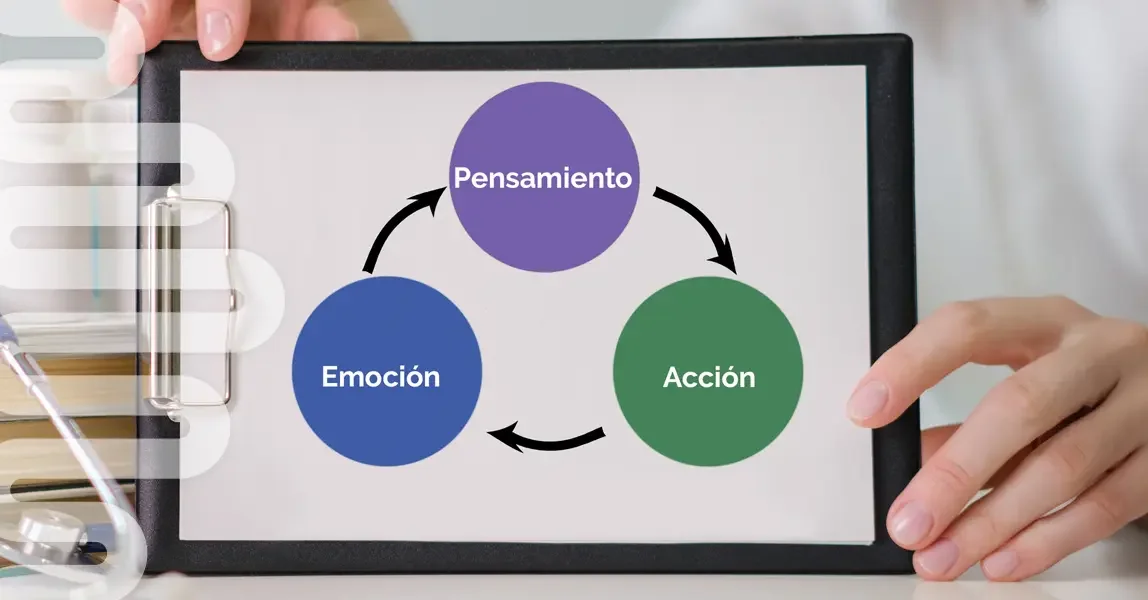
Have you ever experienced that a bad day gets worse because you convince yourself that everything is wrong? That kind of mental trap is exactly what cognitive therapy aims to correct. Cognitive therapy is a form of psychotherapy focused on how we think. In short, we don’t suffer as much from what happens to us, but from how we interpret our surroundings. Below, we clearly explain what this means, how this therapeutic approach works, and why more and more people in Latin America (including Mexico) trust it to improve their mental health.
Cognitive therapy is a psychological approach that focuses on our thoughts and beliefs. It is based on the idea that our thoughts affect how we feel and how we act. If we change the way we think, we can also change our emotions and behaviors to feel better. For example, if you constantly think, "I’m not good enough", you will feel discouraged and stop trying new things.
Cognitive therapy helps you detect and change those negative thoughts for more realistic and healthy ones.
Why cognitive****? The word “cognitive” comes from the Latin cognoscere (to know). It refers to everything related to knowledge, the way of thinking, perceiving, and learning. In some texts, you may see the term cognoscitive instead of cognitive; in this context, cognitive and cognoscitive mean the same. We will also talk about cognitivity, which means the capacity of our mind to process information, learn, remember, and make decisions. In summary, cognitive therapy works on that natural ability we have to think to help us live better.
A brief history and theoretical basis: This type of therapy was developed by Aaron Beck in the 1960s, originally to treat depression. Beck noticed that his depressed patients had very negative automatic thoughts (for example, “I’m a failure” or “Nothing will go well”). By helping them question and modify those thoughts, many patients improved. Thus, cognitive therapy was born. Its central premise is simple but powerful: what matters is not what happens to you, but how you interpret it. Cognitive therapy teaches us to have a more flexible and realistic view of things, which reduces discomfort.
How Does Cognitive Therapy Work?
Cognitive therapy works as a teamwork between the therapist and the patient. It is a structured and practical process. In sessions, the psychologist first helps you identify those negative or distorted automatic thoughts that are affecting your emotions. Then, together, you work to question those ideas and seek more objective interpretations.
Here’s an example of cognitive psychology in action: Gerardo, a young man from Mexico City, applies for a new job and doesn’t get it. He immediately thinks: “I’m useless, I’ll never achieve anything good”. That thought generates anxiety and sadness, and he might decide to give up. In a cognitive therapy session, his psychologist would ask questions like: “What evidence do you have that you will never achieve anything?” or “Could there be other reasons why you didn’t get the job?”. Gradually, Gerardo begins to see that he might exaggerate negative conclusions. He can recognize that although he didn’t get the job this time, it doesn’t mean he will never get one. This change in perspective alleviates his anxiety and motivates him to keep trying.
Techniques Used: Cognitive therapy often includes homework tasks. For example, keeping a thought diary to record situations that caused you discomfort, what you thought at that moment, and how you felt. Another common technique is cognitive restructuring, which involves replacing distorted thoughts (“Everything goes wrong for me”) with more balanced ones (“Sometimes I make mistakes, but other times things go well”).
Practical and Brief Approach: Unlike other longer therapies, cognitive therapy (and cognitive-behavioral therapy) tends to be brief and focused on concrete goals. It usually lasts between 6 weeks and 6 months of treatment, with weekly sessions. From the first session, specific goals are set (for example, “reduce anxiety when speaking in public” or “improve mood”) and progress is measured. Many prefer it because it is structured and gets to the point: it focuses on solving current problems rather than deeply analyzing the past. This doesn’t mean it’s magic or instantaneous, but it tends to show results in less time than other approaches. In fact, in clinical settings, it is often said that it is one of the fastest therapies to see improvements.
What Problems Does Cognitive Therapy Help With?
Cognitive therapy has proven effective for a wide range of common psychological problems. Among the disorders and situations where it is most used are:
- Depression: Helps break the cycle of negative thoughts and hopelessness.
- Anxiety: For generalized anxiety, panic attacks, phobias, and post-traumatic stress. Cognitive therapy teaches how to manage catastrophic thoughts and reduce excessive worry.
- Obsessive-Compulsive Disorder (OCD): Helps question alarmist interpretations that trigger compulsions, combined with exposure techniques.
- Self-esteem and self-image issues: Allows changing core beliefs like “I’m worthless” for a more compassionate and realistic view of oneself.
- Eating disorders: Helps identify and change distorted thoughts about weight, food, and personal value.
- Stress management and everyday problems: Even if you don’t have a diagnosed “disorder,” the cognitive approach helps better manage difficult life situations (couple conflicts, grief, work pressure, etc.) because it teaches you to face stressful situations more balanced.
In all these cases, cognitive therapy offers practical tools. It doesn’t just involve talking; it provides skills to apply in your daily life: mental relaxation techniques, ways to stop toxic thoughts, different ways to evaluate problems, etc. Additionally, it often includes tasks between sessions (for example, practicing an exercise or recording certain thoughts) that help consolidate what you’ve learned. That’s why it’s a very results-oriented approach.
Is Cognitive Therapy the Same as Cognitive-Behavioral Therapy?
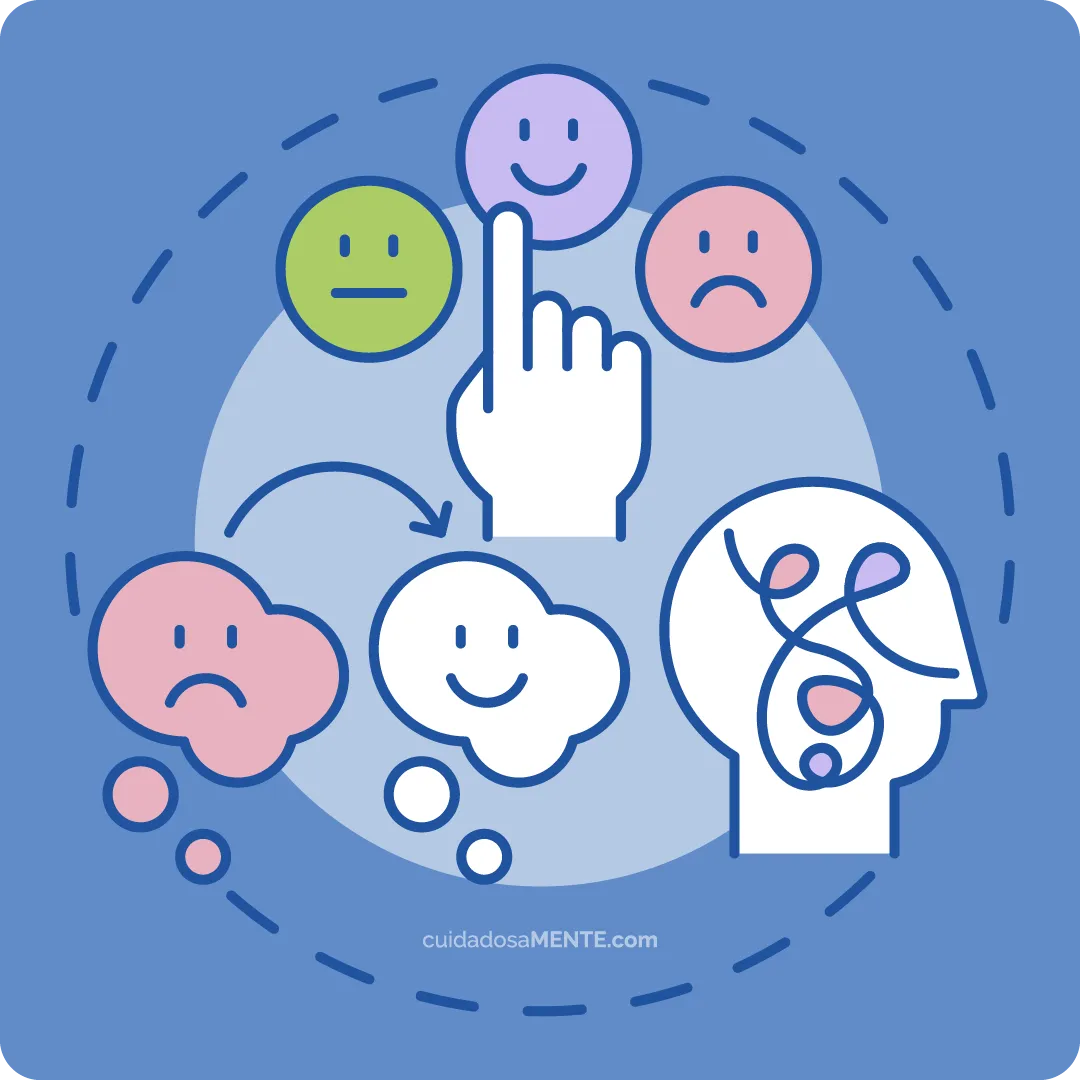
It is very common to confuse these terms or use them as synonyms. The reality is that they are closely related, but they are not exactly the same. Let’s clarify:
- Cognitive Therapy: As we have seen, it focuses on identifying and changing unhelpful thoughts and beliefs. It is the original root developed by Beck and other psychologists in the 1960s-70s.
- Cognitive-Behavioral Therapy (CBT): It is an evolution that integrates behavioral components into cognitive intervention. What does this mean? That in addition to working on thoughts, techniques are also incorporated to modify behaviors. The idea is that thought, emotion, and behavior are connected; thus, sometimes changing the way we act also helps change the way we think (and vice versa). CBT became very popular because it combines the best of both worlds: strategies for the mind and for actions.
Currently, when someone seeks cognitive therapy, they will almost always receive cognitive-behavioral therapy, as it is the standard approach in many places. We could say that CBT is one of the most well-known cognitive therapies but enriched with behavioral techniques. For example, a cognitive-behavioral therapy for social anxiety will include not only reexamining thoughts like “everyone will judge me”, but also gradual exposure exercises to social situations to overcome fear. Both aspects reinforce each other.
And what about cognitive orientation? Sometimes you will hear that a psychologist has a cognitive orientation or cognitive-behavioral orientation. This simply indicates that the professional bases their therapy on these principles: they will focus on your current thought processes and active techniques to help you improve, rather than exploring your childhood or other approaches in depth (as a psychoanalyst might, for example). In Mexico, many young clinical psychologists have a cognitive-behavioral orientation, as it is one of the most scientifically supported currents worldwide.
How to Find Cognitive Therapy in Mexico?
In Mexico, like in many countries, cognitive therapy (particularly cognitive-behavioral) is increasingly accessible and popular. If you are interested in starting a therapeutic process, it’s good to know that you have several options:
- Public Sector: Institutions like IMSS (Mexican Social Security Institute) and other health departments offer psychology services. In recent years, IMSS has promoted mental health care in family medicine clinics, and many of its brief interventions are based on cognitive-behavioral therapy principles. However, keep in mind that public services may have waiting lists and more spaced sessions.
- Private Practices: There are many private psychologists throughout Mexico who practice cognitive therapy. In large cities like CDMX, Guadalajara, or Monterrey, it’s easy to find specialists in cognitive therapies. Look for those who are qualified and have some specialization in cognitive-behavioral therapy.
- Online Platforms: Online therapy has grown significantly, offering the convenience of speaking with your therapist from home. There are specialized platforms in Mexico where you can find psychological therapy in virtual format with certified professionals. This modality has proven very useful for those living in areas with few specialists or having complicated schedules. Additionally, online therapy is as effective as in-person therapy for many issues.
When searching, don’t hesitate to ask about the therapist’s orientation. It’s perfectly valid to ask, “Do you use cognitive therapy or cognitive-behavioral therapy in your sessions?”. A good therapist will gladly explain it to you. The important thing is that you feel comfortable and see that the person is qualified.
If you notice that your thoughts are playing tricks on you in your daily life, approaching a professional with a cognitive focus can be a great step towards regaining your well-being. You are not alone!
Frequently Asked Questions
Does cognitive therapy really work?
Yes, cognitive therapy (including cognitive-behavioral therapy) is among the psychological therapies with the most scientific evidence in its favor. Various international studies have shown that it is effective in reducing symptoms of depression and anxiety, even favorably comparing it with medication in some mild to moderate cases. Of course, its effectiveness depends on each person and the proper guidance of a professional, but in general, it is backed by health institutions worldwide for its good results.
How long does it take to see results with cognitive therapy?
This can vary, but many people start to notice changes within a few weeks. Being a brief and focused therapy, some improvements (such as feeling more at ease) can be observed relatively quickly.