
Disorganized Attachment: What It Is and How to Identify It
Disorganized attachment describes an emotional pattern where individuals experience confusion in relationships with their security figures, impacting their future interpersonal connections.

Disorganized attachment describes an emotional pattern in which a person experiences confusion when relating to those they consider security figures, typically their mother, father, or primary caregivers.
Those seeking to understand what it means to have disorganized attachment often encounter behaviors that seem contradictory, such as needing closeness while fearing the very figure that should provide comfort.
What Does It Mean to Have Disorganized Attachment?
The term arises from attachment theory formulated by John Bowlby (1969, 1980) and expanded by Mary Ainsworth (1978), which explains how early bonds with caregivers shape emotional and social development.
Among the types of attachment, disorganized attachment is one of the most complex because the child perceives the same figure as both a source of safety and a threat.
Those wondering what anxious attachment means often confuse it with this pattern, although they are not the same. In anxious attachment, there is a fear of abandonment, while in disorganized attachment, internal confusion predominates: the child seeks attachment figures for security but simultaneously perceives them as threatening.
This generates significant consequences for personality development and the type of interpersonal relationships in the future.
How Disorganized Attachment Was Identified
Mary Main and Judith Solomon observed that some children exhibited behaviors that did not fit into other types of attachment. They would approach their caregivers but simultaneously avoid eye contact, freeze, or display disoriented movements.
These patterns reflected a temporary collapse in emotional regulation. The child did not know what to expect from their caregivers and manifested confusion and insecurity, which prevented them from developing consistent strategies to calm themselves or feel safe.
Subsequent research showed that these early experiences manifest not only through behavior but also have neurobiological correlates.
Since early exposure to stress and chronic fear alters the regulation of the hypothalamic axis, early attachment experiences leave marks on brain architecture and stress response patterns. (Schore, 2001)
What Causes It?
Disorganized attachment often develops in contexts where primary caregivers are unpredictable, neglectful, or threatening. Among the most studied factors are:
- Physical or emotional abuse, when the caregiver becomes a source of fear.
- Sexual abuse, which breaks basic trust and confuses the relationship between care and threat.
- Emotional neglect, absence of attention, or lack of sensitive response.
- Caregivers with unresolved trauma, who relate to the child from their own internal confusion.
- Addictions or mental illnesses in caregivers, which hinder emotional availability and generate instability.
In all these cases, the child receives contradictory messages; they seek safety but also fear it.
Manifestations of Disorganized Attachment in Childhood
Signs are often observed in the early years of life. They do not represent "bad behavior," but rather the expression of a profound lack of coherence in the bond.
- Contradictory behaviors when interacting with the caregiver
- Episodes of freezing or paralysis
- Expressions of fear towards the caregiver
- Difficulty in self-regulating emotions
- Impulsivity, aggression, or disorganized behaviors
These behaviors indicate that the child has not been able to establish a stable strategy for safety because they live in an uncertain emotional environment.
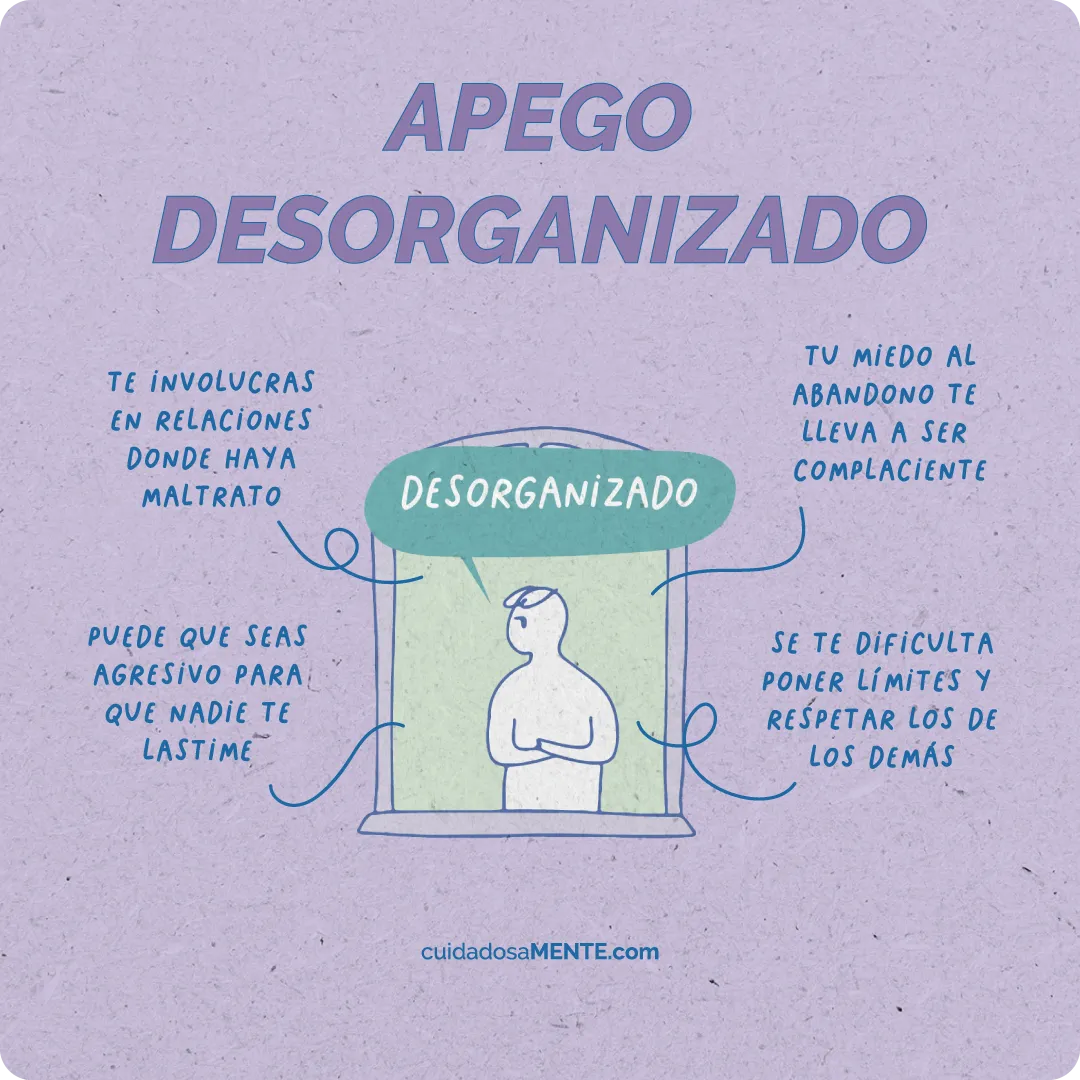
How It Manifests in Adulthood
Early experiences do not determine the future, but they do leave marks that can appear in adulthood. Among the most common manifestations are:
- Unstable romantic relationships, with a desire for intimacy and fear of abandonment
- Distrust even towards close individuals
- Higher risk of psychological disorders such as depression, anxiety, or borderline personality disorder
- Self-destructive or impulsive behaviors such as self-harm
- Difficulty in setting boundaries or asking for help
- Risk of repeating patterns of abuse or neglect when raising children
The person may feel that they "want to get closer" but "cannot trust." This internal tension often generates guilt, shame, or emotional exhaustion.
Can It Be Worked On in Therapy?
Although disorganized attachment generates severe consequences, it is not irreversible. As human beings, we have the capacity to develop new forms of attachment through stable relationships and professional support. To work with this type of attachment, experiences of safety, coherence, and care must be generated.
The most commonly used interventions include:
- Trauma-focused therapy
- Cognitive-behavioral therapy
- Couples or family therapy
- Presence of secure bonds and meaningful relationships
- Mindfulness and self-care practices
Therapeutic work, along with experiences of secure attachment in adulthood, allows for reorganizing the way of relating and building more stable bonds.
Understanding this type of attachment not only helps mental health professionals intervene more precisely but also opens a pathway of hope for those carrying these emotional wounds.
Frequently Asked Questions About Disorganized Attachment
How can I tell if I have disorganized attachment?
Contradictory patterns in relationships are often observed, such as seeking closeness while distancing oneself at the same time, intense fear of intimacy, emotional confusion, impulsivity, or difficulty trusting.
Can disorganized attachment be changed?
Yes, especially with trauma-focused therapy and secure relationship experiences. It is not a fixed pattern.
Is anxious attachment the same as disorganized attachment?
No. Anxious attachment focuses on the fear of abandonment, while disorganized attachment mixes the need for closeness with fear of the very figure that should provide security.
Can people with disorganized attachment have healthy relationships?
With therapeutic support and secure bonds, yes. Many people manage to build stable and trustworthy relationships.
Does disorganized attachment always imply a history of abuse?
Not necessarily. It can also arise from emotional neglect, highly unpredictable or traumatized caregivers, or highly stressful environments.