
The Surprising Benefits of Sleeping with Socks On: Science Weighs In
Discover the scientific benefits of sleeping with socks on, as recent research reveals how this habit can enhance sleep quality and promote better thermoregulation.
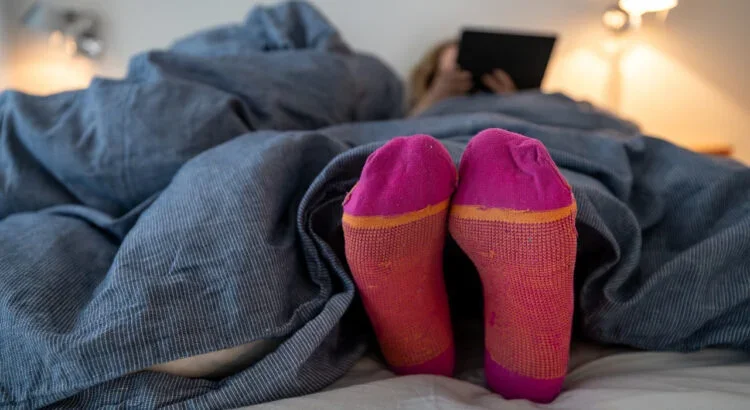
In the realm of sleep habits, the practice of wearing socks to bed has often been met with skepticism or even laughter. However, recent findings from a comprehensive sleep survey conducted by ResMed suggest that this seemingly quirky habit might actually contribute to better sleep quality.
The ResMed 2026 sleep survey, which involved 2,000 participants across France, reveals intriguing insights into nighttime attire and its impact on sleep. Notably, 17% of individuals aged 25-40 report sleeping in socks, a figure that is nearly double that of the general population. While these sock-wearers might not be setting fashion trends, they appear to be making a wise choice for their sleep health.
One of the key findings of the ResMed study is the physiological benefit of keeping feet warm. When the feet are cozy, the body experiences peripheral vasodilation, which is the widening of blood vessels. This process allows heat to circulate from the body’s core to the extremities, effectively lowering the body's core temperature. This drop in temperature signals the brain to initiate sleep, making it easier to drift off.
Consequently, slipping on a pair of clean, loose socks before bedtime can significantly decrease the time it takes to fall asleep. Furthermore, wearing socks at night aids in maintaining stable nighttime thermoregulation, which in turn promotes the release of melatonin, the hormone responsible for sleep. Carlos Nunez, Chief Medical Officer at ResMed, emphasizes that wearing socks to bed is a scientifically backed recommendation, provided they are lightweight, non-compressive, and made from breathable materials. Thick athletic socks, for instance, may not be the best choice when wrapped up in blankets.
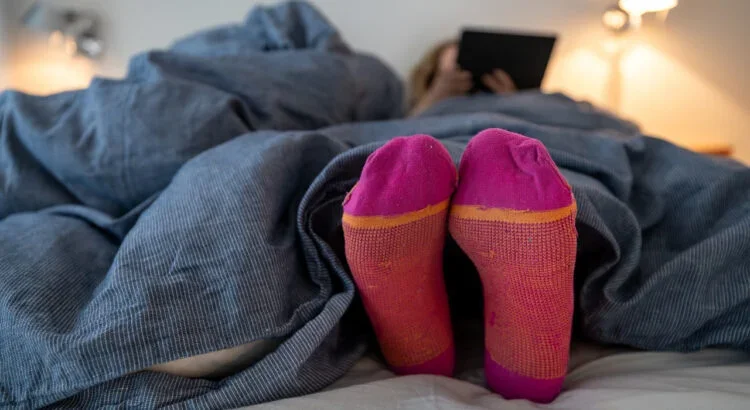
Beyond their fondness for socks, the survey indicates that 42% of French adults prefer to wear pajamas while sleeping. Women, in particular, are drawn to cozy options, with 47% opting for complete pajamas and 24% for nightgowns. In contrast, men tend to favor lighter sleepwear, with 27% choosing to sleep in underwear and 16% going completely natural, compared to just 7% of women. Interestingly, it is not the younger Generation Z who sleep most freely; rather, it is the baby boomers aged 60-69, with 17% of them choosing to sleep nude. This suggests that comfort and body confidence in the bedroom may increase with age.
From a scientific perspective, ResMed's recommendations highlight a crucial point: anything that disrupts thermoregulation can adversely affect sleep. Tight, synthetic, or overly warm clothing can hinder airflow and contribute to night sweats. Conversely, natural fibers like cotton and silk allow the skin to breathe and support the body's thermal regulation. While sleeping nude can be beneficial, it also requires high-quality bedding for optimal comfort.
In conclusion, the evidence suggests that wearing socks to bed may not only be a quirky habit but also a strategic choice for enhancing sleep quality. As more individuals recognize the benefits, the stigma around this practice may continue to fade, paving the way for a more comfortable and restful night’s sleep.