
Understanding and Overcoming Burnout: Key Strategies
Explore the signs of burnout and effective strategies to overcome it. Learn how to manage stress and restore balance in your life.

Have you noticed shifts in your mood lately?
Do you feel something is off but can’t quite pinpoint what it is?
Are you feeling tired, irritable, tense, and lacking tolerance both at work and with those around you?
Have those close to you mentioned that you seem different or fatigued?
The term “burnout” is becoming increasingly common, referring to a state of chronic exhaustion and lack of energy caused by work-related stress.
While various types of stress can be functional and help us achieve goals in different aspects of life, it is crucial to recognize when these stress levels cross the line and lead to physical and emotional distress.
Is it the workplace or is it me?
It’s natural to look inward for the causes of our feelings. However, when dealing with burnout, it's essential to acknowledge that certain workplace factors can contribute to emotional fatigue. Here are some of those factors:
- Company culture: Some organizations foster an interaction style that can be draining due to unclear processes, poor communication, or excessive internal competition.
- Remote work: Although working from home has many benefits, it can be exhausting not to have a physical separation between work and home, leading to feelings of social isolation due to minimal in-person interaction.
- Extreme demands: Despite being outdated, many companies still operate with a management style focused solely on numerical results, neglecting the human element.
- Lack of boundaries: This primarily involves the imbalance between workload and hours.
- Lack of recognition: Prolonged feelings of being undervalued can lead to burnout and demotivation in the workplace.
- Monotony: Engaging in repetitive tasks can easily diminish interest and motivation.
- A new position: This can often occur when one receives a long-awaited promotion, which may come with a significant increase in responsibilities that require a lengthy adjustment period or the development of new skills to meet objectives.
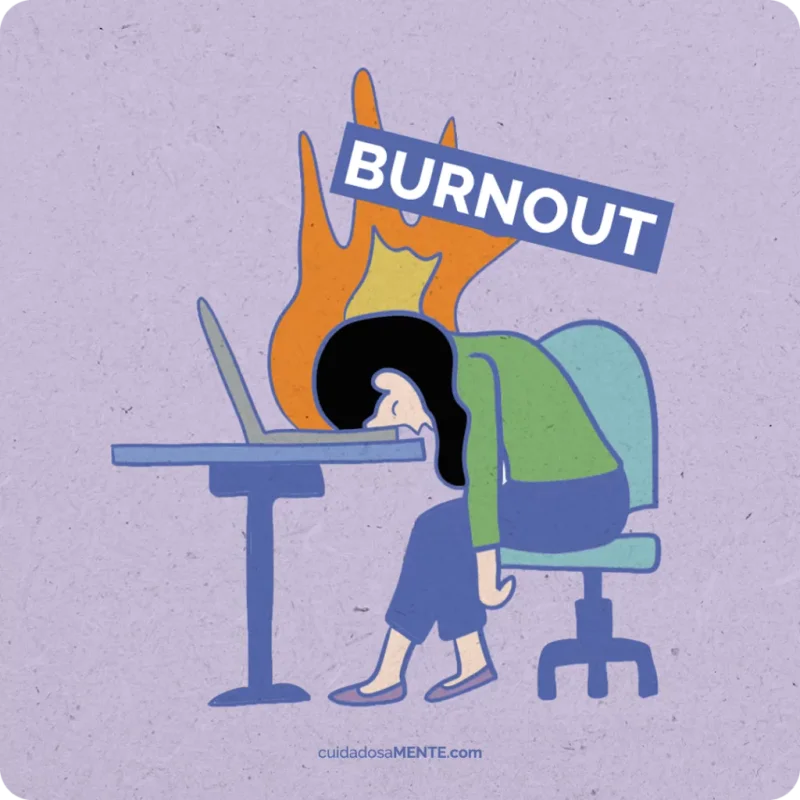
Do I have burnout?
- “When I wake up, I have no desire to get out of bed.”
- “I slept, but I didn’t rest.”
- “I constantly wake up during the night.”
- “I feel uneasy when I think about work.”
- “No matter how hard I try, I feel like it’s not enough.”
- “I no longer enjoy my job.”
- “My energy isn’t what it used to be.”
- “Even when I put in effort, I feel unmotivated.”
- “I feel tired and/or demotivated almost all the time.”
- “I feel like I need to do something different, but I don’t know how, and I lack the energy to start.”
- “I’ve lost interest in activities I used to enjoy.”
If you resonate with five or more of these statements, you may be experiencing chronic stress, emotional exhaustion, or burnout. Ignoring it won’t help and may even intensify your feelings of fatigue.
The good news is that there are steps you can take to feel better!
Recommendations for Overcoming Burnout
Awaken your curiosity and explore different ways to manage burnout with kindness. Make small attempts and observe if anything changes for you. Remember, it’s a process. Your experiences, emotions, and sensations are valid and unique; listening to yourself will always be your most important guide.
Here are some strategies to combat burnout:
1. Educate Yourself:
Naming what you’re going through can help you feel less alone and understand that every emotion and sensation is valid. Reading about burnout will provide you with a gentle understanding of what it entails.
2. Break the Cycle:
It can be easy to go through the motions day after day. Introduce small changes to your routine, like listening to your favorite song while getting ready for work or jotting down thoughts or emotions you experience throughout the day.
3. Set Kind Boundaries:
Tasks at work and home never seem to end. Establish agreements with yourself to recognize when enough is enough, plan your daily activities in a list, and check off completed tasks. Visually, this can provide a sense of accomplishment with each task you finish.
4. Move Your Body:
You may not feel motivated and might need extra effort to get started. Choose activities you enjoy, such as walking or dancing, or set reminders on your phone for active breaks. If you feel more energized, consider incorporating an exercise routine that fits your schedule, even if it’s just once a week.
5. Meditate or Practice Mindfulness:
You don’t need to be an expert in meditation; simply taking 1 or 2 minutes a day to breathe mindfully can help you stay present. If you’re unsure how to do this, you can find some meditations that assist you at various times.
6. Balance is Key:
If you’ve been overwhelmed at work, other areas of your life may need more of your attention. Start with what you feel you’ve neglected and identify what you’d like to do about it to try to restore balance.
7. Incorporate Enjoyment:
Try to schedule an activity you enjoy into your agenda. It doesn’t have to be elaborate; what matters is the significance you assign to it. For instance, savoring a pleasant scent, listening to an engaging podcast, or even learning something new that has always piqued your interest.
Psychological therapy can also be a valuable ally in learning new resources and tools for emotional management during this process. If you feel it’s necessary, don’t hesitate to seek help; having support along the way can make the journey much more manageable.