
Allowing Your Partner to Search Through Your Phone is a Big Mistake (Even If You Have Nothing to Hide), Warns Psychologist Claire Petin
If searching through each other's phones is a practice to be banned, what about allowing free access to everything it contains? Claire Petin, clinical psychologist, shares her expertise on the subject.

Allowing Your Partner to Search Through Your Phone is a Big Mistake (Even If You Have Nothing to Hide), Warns Psychologist Claire Petin
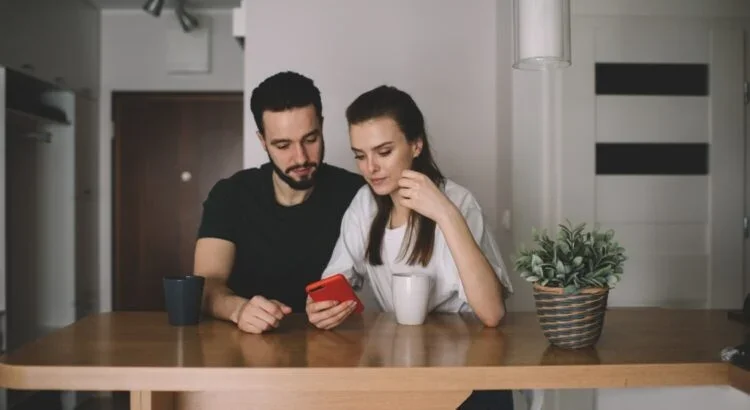
If searching through each other's phones is a practice to be banned, what about allowing free access to everything it contains? Claire Petin, a clinical psychologist, shares her expertise on the subject.
Show me the contents of your phone, and I will tell you who you are. Whether we like it or not, our phones contain a wealth of personal information. From our personal emails to conversations with family or friends, and our social media, phones are the guardians of our intimacy. This is why, in cases of doubt about a partner's fidelity and honesty, some people seek to uncover everything contained in these digital diaries. When a phone is searched without the owner's knowledge, it is referred to as "snooping". In France in 2023, a survey conducted by Ifop in partnership with Journal du Geek revealed that 4 out of 10 French people had spied on their partner's smartphone. This practice is unlikely to improve, as one in two people under 25 had already been a victim of a violation of their digital intimacy by their partner. But sometimes, the dive into intimacy is offered. Is searching with permission, therefore, healthy?
Implicit Reciprocity
Accessing the phone can be done temporarily or permanently. The partner knows the password and has permission to look at whatever they wish. "This gesture is often presented as proof of absolute trust," comments Claire Petin, clinical psychologist. A sign that one is willing to show vulnerability to the other, offering total access to our intimacy, this practice is, however, not as healthy as one might think.
An implicit reciprocity is expected, which can create considerable pressure on the other.
"However, just because access is offered does not mean it should become a norm within the couple. Reciprocity is neither mandatory nor automatic," she adds. Yet, this apparent great mark of trust often calls for reciprocity, and when it is not the case, it can send the wrong signals unintentionally. "This can reinforce suspicions or create a sense of guilt in the one who wishes to preserve their space," indicates the psychologist.
In this type of configuration, access to the phone is done under pressure, out of fear, or in a context of control. Even if there is "consent," it is not given freely and knowingly. "When a partner feels compelled to share their messages, social media, and exchanges, it is no longer a matter of trust: it is a form of submission or resignation," she adds.
Preserving Your Right to Privacy
But having "nothing to hide" does not necessarily mean having to show everything, reminds Claire Petin. Regardless of the relationship, we all have the right to respect our privacy. It is no coincidence that French law protects it. Article 226-15 of the Penal Code states that intercepting, diverting, using, or disclosing correspondence sent, transmitted, or received electronically is punishable by one year in prison and a fine of 45,000 euros.
"Love does not erase individual boundaries, assures Claire Petin. Wanting to set clear limits and preserve a personal space is not a lack of trust: it is a sign of emotional maturity. It is about choosing a relationship based on trust and communication, not on transparency at all costs or surveillance." There are many other ways to build and strengthen trust within a couple. And forced access to the other’s phone is not one of them.