
Can We Soon Sleep While Staying Awake? The Incredible Discovery from the University of Wisconsin on the Brain
In Madison, researchers have managed to make parts of a brain sleep while the animal remains awake. This local sleep experiment could one day change the way we protect memory and cognition.
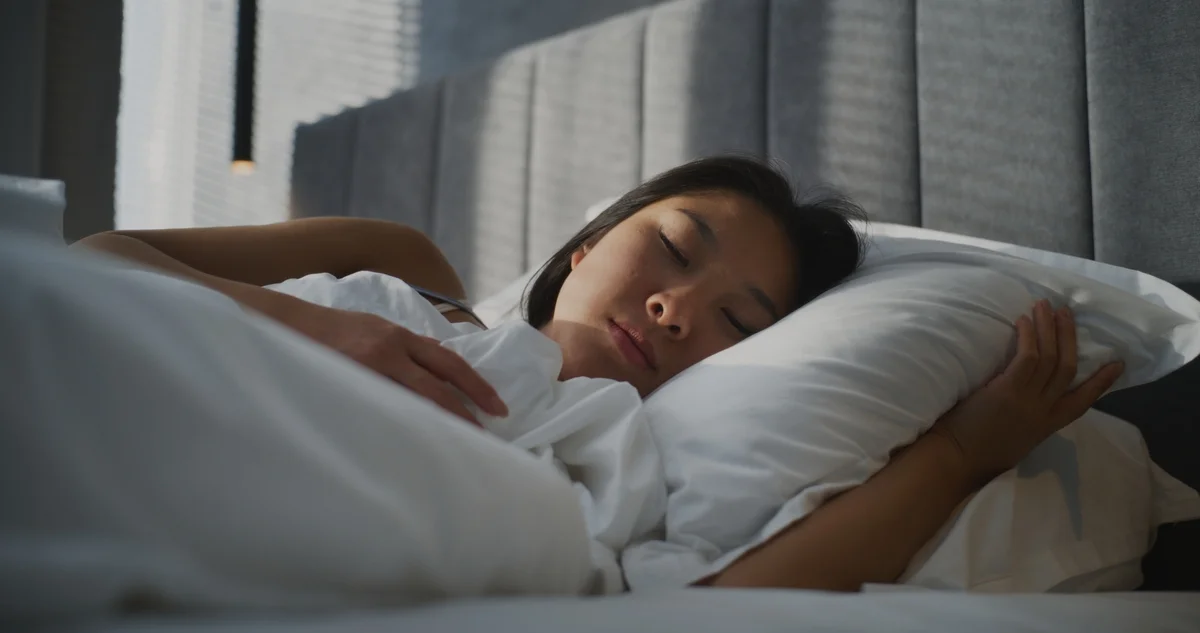
Can We Soon Sleep While Staying Awake? The Incredible Discovery from the University of Wisconsin on the Brain
In Madison, researchers have managed to make parts of a brain sleep while the animal remains awake. This local sleep experiment could one day change the way we protect memory and cognition.
What if part of your brain could switch to night mode while you continue to move, explore, and live your day as if nothing were happening? This is exactly the science-fiction-like scenario that a team from the University of Wisconsin-Madison has just tested in mice. The researchers successfully triggered, in an awake brain, waves typical of deep sleep, with very real restorative effects. These findings, published in the journal Nature Neuroscience, suggest that we can replicate some of the benefits of sleep without losing consciousness. Behind this idea of "sleeping while staying awake" lies a central concept in neuroscience: local sleep of the brain, where only certain areas rest. A mechanism much more subtle than just a simple pause button.
Deep Sleep: Why the Brain Needs to Rest
In mammals, sleep is not a luxury: it is a biological necessity. While awake, the brain learns, moves, and constantly analyzes its environment. The connections between neurons, the synapses, strengthen and multiply. However, a brain that never rests eventually saturates, consumes more energy, and loses part of its ability to record new information.
Non-paradoxical deep sleep (NREM), which accounts for about 80% of sleep in adults, serves as a major synaptic "reset". Connections related to important memories are consolidated, while others are weakened, freeing up space for future learning. This cleaning is accompanied by slow waves: periods of intense activity ("on"), where millions of neurons activate together, followed by periods of silence ("off") where they temporarily cease their activity.
Sleeping While Staying Awake: The University of Wisconsin-Madison Experiment
For several years, the team led by psychiatrist and neuroscientist Chiara Cirelli has observed that rats, as well as humans deprived of sleep, sometimes exhibit bursts of local slow waves while remaining awake. "What we are essentially doing is forcing sleep in a local region of the brain. While this part consolidates memories and restores the ability to learn, other parts remain conscious, alert, and connected to the environment," explains Chiara Cirelli, as cited by PsyPost.
To test this idea, the researchers used optogenetics, a technique that allows for the activation or inhibition of neurons using light. Nineteen mice were kept awake for five hours using new objects placed in their cage. During the last half hour, light pulses, synchronized with the rhythm of slow waves observed during deep sleep, were applied to one side of the cortex, while the other served as a control area. The animals continued to move and explore their environment normally.
What Are the Benefits of This "Local Sleep" of the Brain?
The results show that the stimulated area seemed to have already recovered part of its need for sleep even before the animals fell asleep. Specifically, the researchers observed three major effects:
- A decrease in slow waves during subsequent sleep in the stimulated area, indicating that the sleep pressure there had already been partially reduced.
- Brain changes comparable to those observed after several hours of actual sleep.
- Preservation of memory capabilities despite sleep deprivation.
To verify the effect on memory, the researchers then subjected the mice to a tactile memory test. The well-rested mice recognized a new element introduced into their environment. The sleep-deprived mice could no longer clearly differentiate. In contrast, those that received rhythmic stimulation maintained performance comparable to that of the rested group.
"This work deciphers a bit more why we sleep and how we learn, bringing us closer to a better understanding of how to prevent and treat cognitive decline," commented Amy Bany Adams, interim director of the National Institute of Neurological Disorders and Stroke, according to PsyPost.
A Pathway to Mitigate the Impact of Sleep Deprivation
While the results are encouraging, the authors remain cautious. Only small portions of the sensorimotor cortex were targeted, and the method relies on heavy surgery as well as genetic modification of neurons, approaches that are impossible to transpose as is in humans. The goal is therefore not to replace a night of sleep with a few light stimulations. Rather, this work opens a research pathway: understanding how to locally replicate certain restorative mechanisms of sleep to ultimately limit the consequences of sleep deprivation.
Chiara Cirelli already mentions much less invasive technologies, including transcranial stimulation, which could induce in humans neural rhythms similar to those observed during deep sleep.