
The Impact of Music on Brain Health: A Neuroscientific Perspective
Explore how music affects brain health, enhancing well-being and preventing neurodegenerative diseases through engagement with melodies and rhythms.

The brain, often referred to as the commander of our vital functions, orchestrates everything from our thoughts and memory to our ability to move and communicate. It is also the hub where our emotions are generated, processed, and regulated.
This intricate system relies on a vast network of nerve cells known as neurons, which work tirelessly under the guidance of the brain.
Neuronal Communication and Brain Plasticity
In the event of an accident that results in brain injury, certain functions may be lost as the experience disrupts the activity of the affected neurons. It’s akin to a power outage, leaving parts of the brain in darkness.
However, thanks to the brain's plasticity, specific activities can stimulate neurons, encouraging them to reorganize and form new networks. This means that even after injury, it is possible for the brain to restore lost functions by reestablishing connections.
You might wonder, how does this information apply if I haven’t suffered a brain injury? A healthy brain can also be stimulated to enhance its performance and cope better with stress and aging.
Just like muscles, the brain requires “maintenance” to stay in shape. Regular exercise, proper nutrition, learning new skills, meditating, and engaging with music—whether listening, playing an instrument, or dancing—are all activities that promote the formation of new neural connections, keeping the brain active.
Music as a Tool for Mental Health
Experts in mental health, including Nazaret Castellanos and Marian Rojas, are leveraging social media to share insights on why music serves as a powerful tool for maintaining brain health, preventing neurodegenerative diseases like dementia, and fostering feelings of joy and well-being.
The reason behind this is that music activates numerous neural networks across various regions of the brain, enabling us to perceive and interpret it. When we listen to music, the brain distinguishes it from other sounds and engages multiple structures to process it. One area focuses on melody, while another handles rhythm and meter.
Interestingly, “both systems work together and transmit information through neural networks to the musical lexicon,” which is where the brain stores musical information accumulated throughout life.
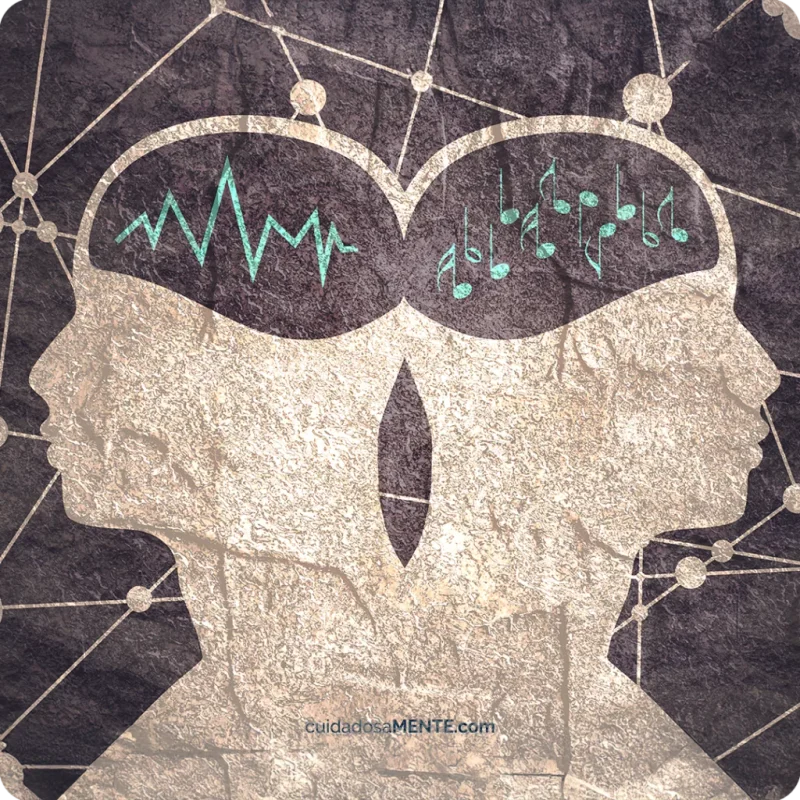
How the Brain Processes Music
Research shows that the demands of daily life can trigger the release of cortisol, known as the “stress hormone.” Marian Rojas explains that while cortisol is essential for managing everyday stress, prolonged exposure can harm our immune system and digestive health. It also impacts our cognitive abilities, particularly in the prefrontal cortex.
Elevated cortisol levels can lead to feelings of fatigue, confusion, and even illness. Fortunately, music acts as an antidote to stress, reducing cortisol levels and promoting relaxation and well-being by stimulating the release of oxytocin, the hormone associated with love.
Additionally, music activates the limbic system, the part of the brain responsible for emotions. Listening to your favorite tunes can trigger the release of dopamine, which enhances feelings of happiness.
Dr. Alicia Castillo, a neuroscience researcher at UNAM, describes music as “a great protector of the brain,” noting that “when we listen to our favorite songs, various bodily functions respond.
These include fluctuations in body temperature, heart rate, hunger, and alertness, depending on the song’s emotional impact.”
The Benefits of Dancing for the Mind
Dancing is not merely a physical activity; it also stimulates the brain. Dance promotes the creation of “new neurons and their connections.” It releases neurotransmitters like endorphins, which induce pleasure and reduce pain, along with serotonin for mood enhancement and oxytocin to foster feelings of attachment.
Nazaret Castellanos explains that dancing requires the brain to process music, engaging various structures in the cerebellum to coordinate movements, maintain rhythm, plan sequences, and merge body and mind to execute steps in a physical space.
Moreover, dancing improves posture, as an upright stance signals to the brain that we are successful, which in turn boosts self-esteem.
Observing others dance can also stimulate the brain regions involved in learning movements.
Research indicates that regular dance practice, particularly in older adults, can reduce the risk of neurodegenerative diseases, especially Alzheimer’s. It enhances cognitive abilities such as attention and memory, improves balance, and aids in emotional regulation.
Group dancing fosters greater pain tolerance, increases satisfaction levels, strengthens social bonds, and enhances communication.
Singing and Playing Instruments
Similar to other musical activities, singing and playing instruments elevate oxytocin levels while lowering cortisol. They also enhance attention, concentration, and memory, with singing serving as a vital channel for expressing and evoking emotions.
Choral singing fosters a sense of belonging and solidarity, as members synchronize their efforts for optimal performance, sharing emotions to the extent that their heartbeats can align.
Beyond these benefits, scientific communicator Jordi Jauset points out that the brain lacks its own lymphatic system, making waste removal from its neuronal tissue challenging.
Surprisingly, the vibrations generated when we sing, hum, vocalize, or shout create a subtle massage effect that aids in brain cleansing.
Conclusion
Music is a complex human creation that has accompanied us throughout history and evolved alongside us. Any form of musical expression engages numerous brain structures. Activities like listening to music, playing instruments, dancing, singing, or participating in a choir keep our brains active, healthy, and robust.
It is highly beneficial for children to engage in musical activities from an early age, as these stimulate brain development, enhance language skills, improve psychomotor abilities, and bolster cognitive functions like attention and memory, as well as social skills. In older adults, music contributes to preventing degenerative diseases, particularly Alzheimer’s.
Ongoing research continues to explore the relationship between music and mental health, aiming to utilize it as a therapeutic tool for emotional disorders.
As science progresses, let’s enjoy music, sing, dance, and embrace happiness, all to the rhythm of the maestro’s music!