
Suicide: Warning Signs and How to Act in Time
Talking about suicide remains difficult but is necessary. Naming it responsibly, with clear information and clinical experience, can make a real difference. This article aims to answer frequently asked questions such as what is suicide, what are its warning signs, and how to help someone with suicidal ideation.

Talking about suicide remains difficult but is necessary. Naming it responsibly, with clear information and clinical experience, can make a real difference.
This article aims to answer frequently asked questions such as what is suicide, what are its warning signs, and above all, how to help someone with suicidal ideation, whether you are going through a crisis or supporting someone close to you.
September is the month of suicide prevention worldwide, with special emphasis on September 10. However, care and conversation should not be limited to a date. Let us remember that suicide is a permanent solution to a temporary problem, a phrase we will address in more depth later.
What is suicide and how does it manifest?
The World Health Organization (WHO) defines suicide as the deliberate act of taking one's own life. Generally, this act is the result of a process that may include recurrent thoughts about death, planning, and, in some cases, previous attempts.
A key point that frequently arises in consultations is this: many people do not wish to die; they wish to stop suffering. Emotional pain becomes so intense that the person cannot see possible alternatives. Understanding this completely changes the way we accompany.
According to recent data, suicide is one of the leading causes of death among young people and young adults. In Mexico, during 2023, there were 8,837 deaths by suicide, with a higher prevalence in men and in the age group of 20 to 39 years. States such as Chihuahua, Yucatán, Campeche, and Aguascalientes show higher rates (INEGI, 2023).
Who is at greater risk of suicide?
Suicide can affect anyone, but there are stages of life with greater emotional vulnerability.
Adolescence: a critical stage
Adolescence involves intense emotional, physical, and social changes. Although there is a natural search for independence, it is also a stage where judgment and decision-making are still developing. The frontal lobe, responsible for evaluating consequences, finishes maturing around the age of 25.
Therefore, having stable support networks, clear boundaries, and available adult figures serves as a fundamental protective factor. When emotional pain finds no words or listeners, the risk increases.
Older adults: a silent risk
Another vulnerable group when addressing the topic of suicide is older adults, who have also experienced significant changes at this stage of life (from 60 years old), primarily characterized by the end of “useful life,” work period, “loss of health,” the “empty nest,” lack of purpose, possible mental illnesses, or significant symptoms of depression and anxiety.
An alarming aspect is that older adults tend to present more planned and lethal suicide attempts, making detecting subtle signs even more important.
Preventing suicide in older individuals requires listening to their needs, providing spaces where they can express what they feel, and accompanying them with empathy, thereby restoring their sense of independence and usefulness.
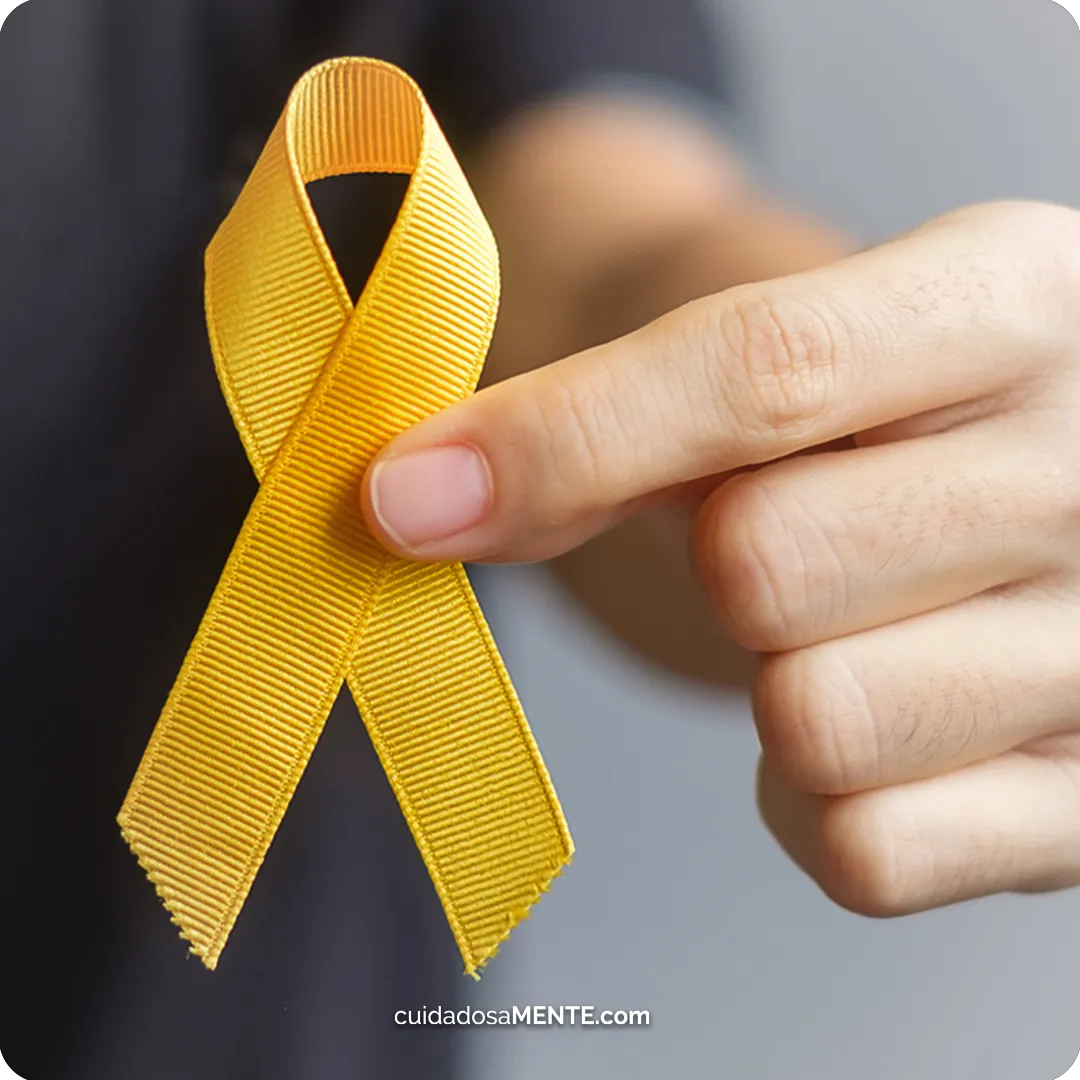
Risk factors and protective factors
There is no single cause of suicide. However, there are conditions that can increase vulnerability or, conversely, provide protection.
Risk factors:
- Traumatic experiences or violence
- Lack of emotional support
- Social isolation
- Substance abuse
- Chronic illnesses or mood disorders
- Unresolved grief
- Family history of suicide
- Socioeconomic difficulties
Protective factors:
- Significant support networks
- Timely access to mental health care
- Conflict resolution skills
Good stress and frustration management - Personal goals and sense of belonging
- Self-esteem and resilience
The presence of risk factors does not mean that a person will attempt suicide, but it does indicate the need for greater support.
As we have observed, suicide can affect people of different ages, contexts, and situations. It is possible that before a suicidal act, there are warning signs or unclear but present messages, and recognizing them can make a difference.
Warning signs of suicide that should not be ignored
Suicide rarely occurs suddenly. Signs often appear beforehand, some more evident than others.
- Loss of interest in previously enjoyable activities
- Marked changes in sleep or appetite
- Intense or sudden mood changes
- Risky behaviors
- Giving away important belongings
- Expressions of intense guilt or shame
- Comments like “they would be better off without me”
- Frequently talking about death or methods
- Unusual farewells
How to help someone in crisis?
Now that we have reviewed some warning signs, it is time to talk about how to help. Genuine support involves active listening, acting with empathy and respect, and validating emotions and thoughts.
Some recommendations may include:
- Listen without judgment. This means creating a space where it is valid to say what one feels. Often, people who consider suicide as an option report that they cannot talk about it because they face invalidation from the system, and saying, “I understand why you see it as an option” can make them feel heard for the first time.
- Ask directly. There is a belief that talking about suicide encourages it, but the reality is that it does not. As we have reviewed, it is not an idea that is planted and executed overnight; it is not something sudden. Asking directly, “Have you thought about hurting yourself?” opens the door to dialogue.
- Accompany at all times. This is important until the crisis passes or more support people arrive. Being actively present is vital to prevent a possible suicidal act, which includes removing dangerous objects or potential lethal weapons (ropes, cables, knives, sharp objects, pills, etc).
Seek professional support. In most cases, people in this situation seek to be heard, validated, and are looking for tools to alleviate their pain. Accompanying and seeking professional support together while remaining a support network makes a difference in an intervention process.
Does talking about suicide promote it?
No. Clinical and scientific evidence shows that talking about suicide responsibly reduces risk, it does not increase it. Silence, stigma, and minimization of pain are factors that isolate.
There are various resources and tools available, and it is normal not to know them all, but the ones mentioned above can help if you find yourself in a situation that warrants their use.
Let us remember that life itself constantly presents challenges but also countless possibilities, and when we allow ourselves to see them, we can view and navigate suffering as something temporary.
Help resources in Mexico
If you or someone close is in crisis, seek immediate help:
- Línea de la Vida (24/7): 800 911 2000
- SAPTEL: 800 472 7835
Frequently asked questions about suicide
Is suicide always related to depression? No. While depression is an important factor, trauma, anxiety, grief, and other emotional conditions also play a role.
How can I tell if someone is just seeking attention or is at real risk? Any expression of suicidal ideation should be taken seriously. It is neither possible nor ethical to minimize the risk.
What do I do if someone asks me not to tell anyone? Confidentiality does not apply when there is a risk to life. Seeking support is a form of care.
Can suicide be prevented? Yes. Suicide prevention includes early detection, support networks, and access to mental health care.
Can I help even if I am not a professional? Yes. Listening, accompanying, and facilitating professional help can make a difference.