
Understanding Emotional Attachments: Types and Implications
Explore the concept of emotional attachment, its types, and their implications in adulthood. Learn tools for building healthier relationships based on your attachment style.

Emotional attachment has become a significant topic in discussions about relationships, prompting many to explore the question: "Why do I behave this way in my relationships?" This article delves into the concept of attachment, its types, and their implications in adulthood, along with tools to foster healthier relationships based on one's attachment style.
To start, let's clarify what attachment is. Throughout our lives, we forge connections with various individuals, beginning with family, friends, neighbors, and romantic partners. These primary connections, particularly with family, significantly influence how we relate to ourselves, others, manage our emotions, and perceive the world.
In essence, the type of attachment we develop directly impacts our emotional well-being and social relationships.
What is Attachment?
Attachment is defined as a profound emotional bond we establish with people, places, objects, and even pets. This concept was introduced by John Bowlby in the 1950s, who emphasized that bonds with primary caregivers are crucial for emotional and social development throughout an individual's life.
Attachment forms in childhood, initially with primary caregivers (usually parents). However, it is possible to reshape one’s attachment style through deep connections formed in adulthood, influenced by life experiences and relationships. The core function of attachment is to provide security and support within an individual.
Types of Attachment
Psychology identifies various attachment styles, some of which foster healthy relationships, instilling confidence in interpersonal connections. Conversely, early bonds can lead to unhealthy behavior patterns, manifesting as anxiety, insecurity, or avoidance.
Understanding the type of attachment one possesses can serve as a compass for navigating relationships. Below is a brief overview of four attachment styles: secure, anxious, avoidant, and disorganized. While some may share similarities, identifying them can be complex. Recognizing your attachment style can provide insights into your relational dynamics.
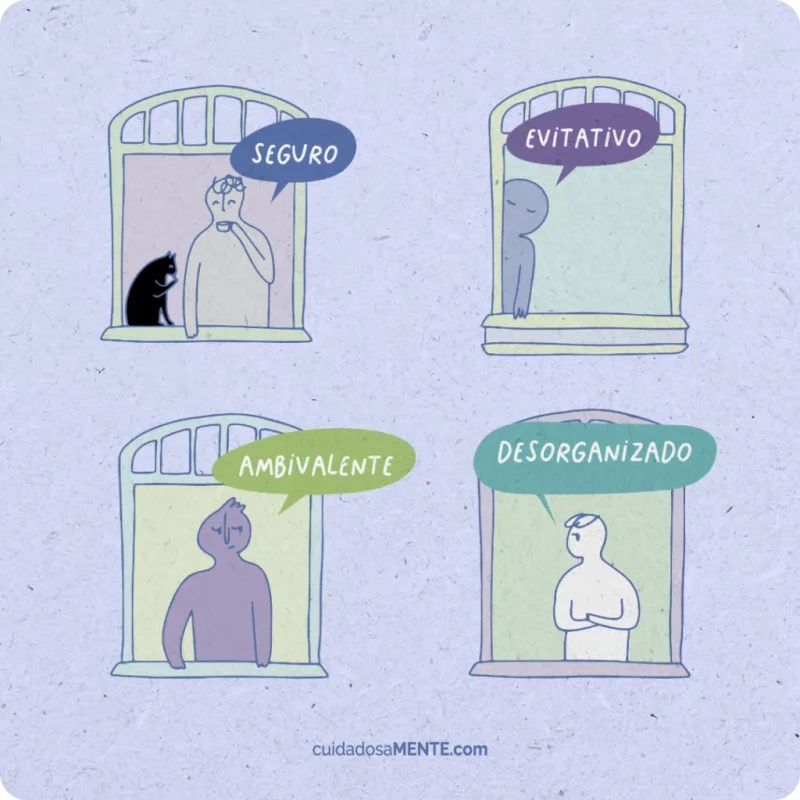
Secure Attachment
Individuals with a secure attachment style typically feel at ease with intimacy. Sharing their emotional world with others poses little risk, enabling them to manage their emotions effectively and form balanced relationships. They trust others and base their connections on mutual respect and confidence.
This attachment style develops when primary caregivers are consistent, attentive, respectful, and responsive to the child's needs.
Anxious or Ambivalent Attachment
Those with an anxious attachment style often feel insecure in their relationships, frequently seeking validation from others and fearing separation, which can evoke feelings of potential abandonment. They may also exhibit emotional dependency, particularly towards parents and partners.
This attachment style generally arises when caregivers provide inconsistent attention, affection, or fail to meet basic needs promptly.
Avoidant Attachment
Individuals with avoidant attachment struggle to form deep emotional connections and often find it challenging to open up to others. They typically maintain emotional distance, avoiding intimate conversations or situations that may expose their vulnerability.
This attachment style often develops when a child's emotional needs are rejected or invalidated by caregivers.
Disorganized Attachment
People with a disorganized attachment style often experience confusion regarding their primary caregivers, feeling torn between the desire for closeness and the need for distance. This attachment is linked to experiences of abuse or neglect in early childhood. In adulthood, it can complicate the establishment of healthy, stable relationships and lead to unpredictable behavior patterns.
How to Address Attachment Styles
Recognizing your attachment style can illuminate how you communicate, resolve conflicts, and relate to others. Importantly, it is possible to modify these patterns. Here are some tools that may assist in this process:
- Psychotherapy. Engaging in therapy can provide a platform to explore healthy relationships throughout your life, your family history, self-image, and the dominant narratives of your life. This journey can help you pave a kinder path for yourself.
- Emotional Self-Awareness. Being aware of your relational patterns and styles is crucial, as many of our actions stem from unconscious influences that significantly affect our behavior.
- Emotional Intelligence. Understanding and managing your emotions is essential for facilitating behavioral and cognitive changes.
- Working on Vulnerability. A common phrase I share with my patients is: "Don’t expect different results by doing the same thing repeatedly." Challenging deeply ingrained patterns can be daunting, but it is essential for achieving a different perspective.
I hope this article provides a deeper understanding of attachment and its types. If any strategies or information resonate with you and you feel the need for further support, consider seeking professional help.