
Avoidant Attachment: When Love Feels Scary in Relationships
Avoidant attachment: when love feels scary. Explore how avoidant attachment manifests in relationships and how to evolve beyond it.
Avoidant Attachment: When Love Feels Scary
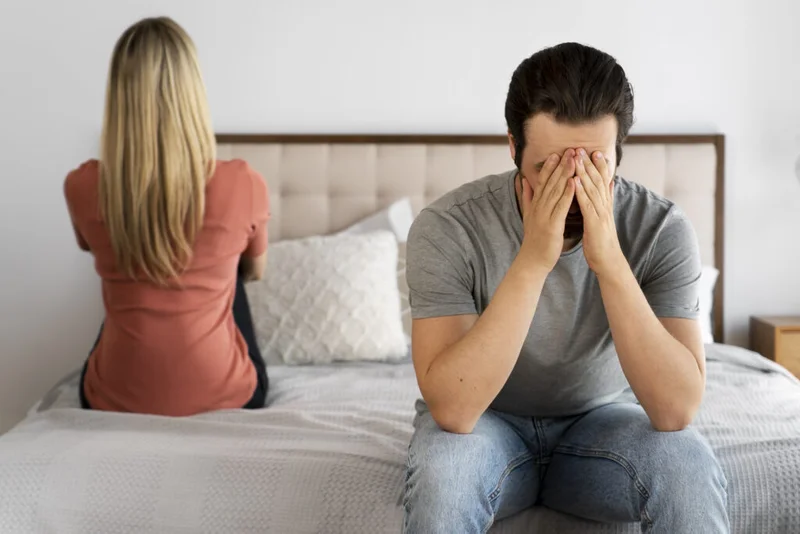
There are those who, when faced with love, create distance. Who struggle to stay when things get deep. Who withdraw as soon as the bond becomes too intimate.
Perhaps you’ve found yourself sabotaging a beautiful story. Wanting the other person… and at the same time, feeling the urge to flee. Feeling suffocated when the other only asks for tenderness.
What if what you’re experiencing isn’t a lack of love… but an unrecognized fear of closeness?
What is Avoidant Attachment?
Avoidant attachment is a relational style characterized by a significant difficulty in allowing oneself to be emotionally touched. Closeness creates tension. Commitment is frightening. And anything resembling dependency is perceived as a threat.
When you operate with avoidant attachment, you might:
- Minimize your emotional needs,
- Avoid deep conversations,
- Prioritize your independence over the bond,
- Close off when the other person gets too close,
- Feel relief after an argument… because there’s space again.
It’s not that you don’t love. It’s that your body has learned to protect itself from intimacy.
The Wounds and Messages That Shape Avoidant Attachment
Avoidant attachment often develops in childhood where emotions were not welcomed. Where one had to be wise, self-sufficient, “strong.”
Perhaps you weren’t truly comforted when you were sad. Maybe you were praised when you showed no emotion. Perhaps you learned that emotions were disruptive… or that they were unacceptable.
The implicit message:
"Figure it out on your own"
"Don’t need anyone"
"Loving is dangerous"
So, you learned to disconnect from your need for connection to avoid the risk of being hurt.
In Relationships, How Does Avoidant Attachment Manifest?
You might recognize yourself in patterns such as:
- A strong emotional autonomy that becomes almost distancing,
- Difficulty saying "I need you,"
- A need for control in the relationship,
- Frequent breakups as soon as the relationship becomes serious,
- Feeling overwhelmed when the other person is too close,
- Discomfort with the emotions of others, even your own.
Sometimes, you’re with someone who seems to love you “too much.” And you pull away. Not because you don’t love. But because loving feels too scary.
What Avoidant Attachment Is Not…
It’s not a lack of love.
It’s not selfishness.
It’s not an inability to be in a relationship.
It’s a strategy. A mode of protection. An automatic response set in place to avoid being too touched, too exposed, too hurt.
Avoidant attachment is not a refusal to love. It’s an ancient fear. The fear of being vulnerable. The fear of needing and being disappointed.
You’re not cold. You’re cautious.
How to Evolve with Avoidant Attachment?
Avoidant attachment is not a fatality. It can be calmed. It can transform. It can soften.
To do this, you can start by:
- Welcoming your emotions, without judgment, even if they come late,
- Daring to talk about your fear, rather than fleeing,
- Learning to stay, even when the other person truly touches you,
- Practicing closeness gently, without forcing yourself, but opening up a little more each time.
You don’t need to be perfect. You need to be real. Even if it’s new. Even if it’s uncomfortable.
And above all: you can learn to love without losing yourself.
All Attachment Behaviors Are Connection Strategies
It’s essential to remember this: in childhood, connection takes precedence over everything.
When the brain develops, when identity is forged, what matters most is staying connected. Not being right. Not being respected. Not even being well understood.
The little girl prefers to cut herself off, silence her emotions, wear a mask of strength, rather than risk breaking the bond.
So yes, you learned to flee, to withdraw, to say "I’m fine" when you’re not… Because it was your best way to stay connected with the adults around you.
These behaviors are not faults. They are imprints. And today, it is possible to understand them, to calm them, to transform them. Without violence. Without shame. With love.
FAQ – Avoidant Attachment and Relationships
Why do I flee as soon as the relationship becomes serious?
Because commitment awakens an old fear: the fear of depending, of being hurt, or losing your space. Fleeing is a form of protection.
Can you love and be afraid of connection at the same time?
Yes. Love can be there, very strong, but covered by a layer of mistrust. The heart wants, but the memory is afraid.
How to tell the other person that I struggle to open up?
By simply talking about what’s happening inside you, without judgment. You can say: "I find it hard to show myself, but I want to."
Can avoidant attachment evolve?
Yes. At your own pace. With awareness, secure connection, gentleness… and sometimes therapeutic support.
Why do I feel better alone… but also sad?
Because your nervous system seeks security in solitude, but your heart longs for connection. It’s this tug-of-war that we can learn to regulate.