
Postpartum Depression: How It Starts and What You Can Do
Postpartum depression is a mental health condition that can arise when many expect you to be well. Learn about its symptoms, how it starts, and ways to seek help.

Postpartum depression is not about being a "bad mom" or "not being grateful"; it is a mental health condition that can arise at a time when many people expect you to be well on the outside. Amidst exhaustion, hormonal changes, physical pain, and the life shock that a baby brings, it’s easier to lose your footing than is often spoken aloud.
Is it "normal" to feel sad during pregnancy?
Yes. It’s important to remember that during this stage, multiple hormones are at play that directly influence your mood. In fact, there is a term to describe the emotional changes that can occur before and after childbirth: baby blues.
This typically manifests as crying, exhaustion, emotional sensitivity, and stress. Generally, it is mild and appears for short periods, disappearing on its own within a few days.
On the other hand, postpartum depression is a clinical condition that lasts longer and can become severe. It usually appears between 2 and 8 weeks after the baby is born, although in some cases, it can manifest up to a year after childbirth.
How does postpartum depression start?
If you’re wondering how postpartum depression starts, it often begins silently and can present as:
- A constant feeling of being overwhelmed, even when "everything is fine"
- Irritability and anger that you don’t recognize as your own
- Intense anxiety, repetitive thoughts, fear that something will happen
- Disconnection, as if you’re watching your life from the outside
- Guilt, shame, or the idea of "I’m not cut out for this"
It can also start with insomnia even when you’re exhausted or total apathy even when told you should "be happy."
When does postpartum depression occur?
The question when does postpartum depression occur is very common among first-time moms and can appear between 2 and 8 weeks after birth, but it can also start earlier (during pregnancy) or present at any time during the first year.
There is no exact date because it’s not just hormonal. Sleep, personal history, the real support you have, your relationship, childbirth, breastfeeding, social pressure, and the type of postpartum experience you have all play a role.
How do I know if it’s postpartum depression?
The symptoms of postpartum depression can vary, but these signs are common:
- Deep and persistent sadness
- Sudden mood swings
- Frequent crying
- Emotional disconnection from the baby or partner
- Sleep disturbances (insomnia or hypersomnia)
- Loss or increase in appetite
- Constant fatigue
- Irritability
- Feelings of guilt
- Thoughts of self-harm or even harm to the baby
Important: Having intrusive thoughts or self-harm does not mean you will act on them, but it is a warning sign. If this occurs, it’s time to seek professional support.
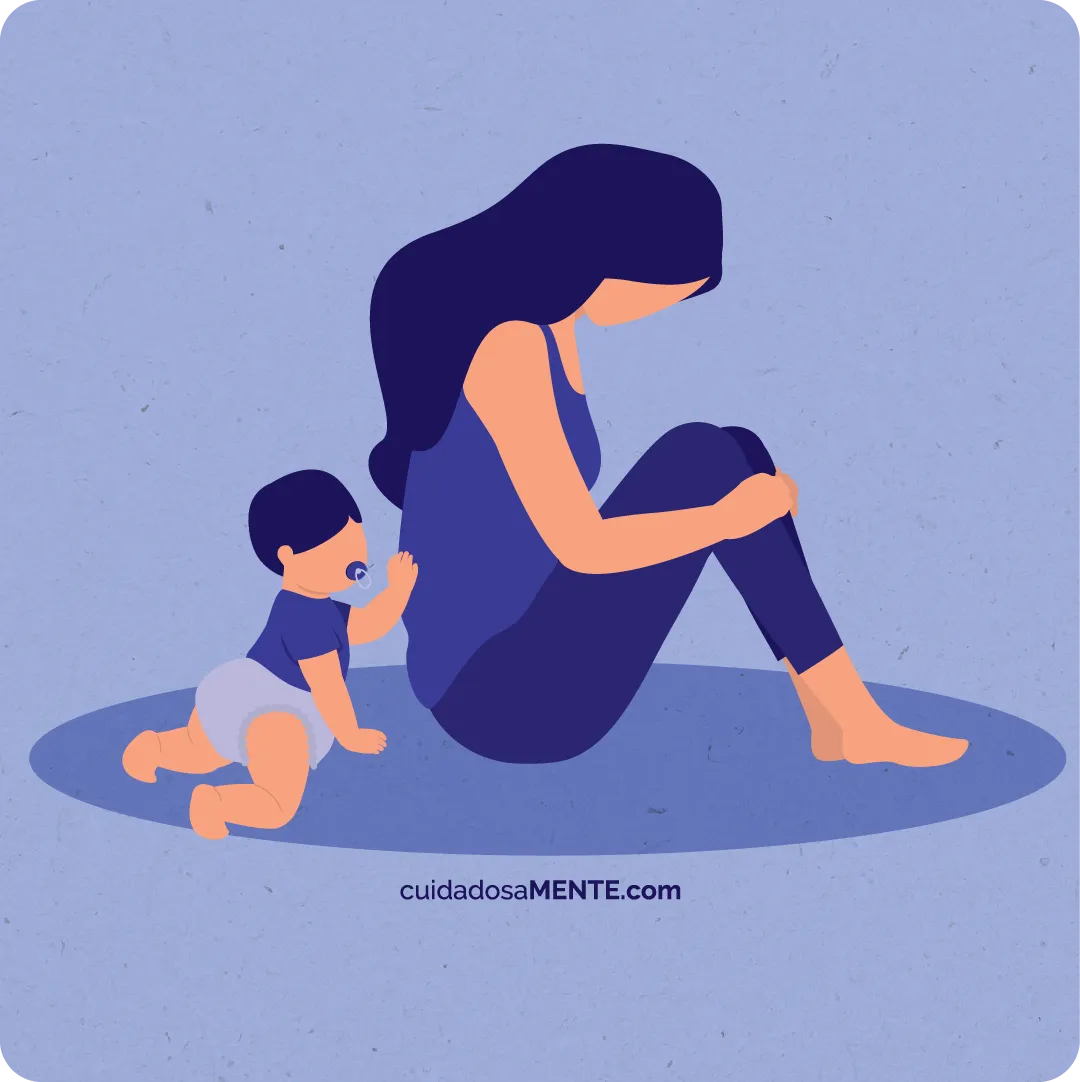
Why does it happen? Hormones play a role, but it’s not just that
There is a real biological component: hormonal changes, physical recovery, breastfeeding, lack of sleep. However, there are also social and emotional changes: new responsibilities, adjustments in the couple's dynamic, external expectations, social pressure, and a redefinition of personal identity.
All of this can influence emotional well-being, and keep in mind: you can love your baby and still feel sad and absent. Both can coexist.
How can I ask for help?
If you find yourself experiencing any of these symptoms, the most important thing is to not blame yourself. Your body and mind are undergoing profound changes, and you are adapting to new responsibilities and roles.
Some ways to seek support include:
• Talking about how you feel with someone you trust. Sharing what you’re going through is essential. Allow others to be aware of your well-being and to support you in caring for your baby.
• Being kind to yourself. Motherhood is already a complex process. Adding unrealistic expectations only makes it heavier. Give yourself permission to go at your own pace, be patient with your processes and those of the baby, and above all, be honest about how you feel.
• Seeking therapeutic support. Psychotherapy can be a great support during pregnancy and motherhood. It helps you understand where certain thoughts, emotions, or behaviors come from and provides you with tools to navigate this process of change in a kinder and more conscious way.
• Relying on close people. Motherhood deserves to be accompanied. You don’t have to do everything alone, and asking for help is not a failure; it’s a valid need.
• Listening to and sharing with other mothers who have had similar experiences. Knowing you’re not alone can be very relieving. Additionally, creating community offers new perspectives and can support you in the most difficult moments.
• Not fearing medication, if necessary. In some cases, medications can help regulate mood and better navigate this process. If needed, consult a psychiatrist who can offer you appropriate and safe treatment for your needs.
If someone close to me has postpartum depression, how can I support them?
Now, if it’s not you experiencing postpartum depression but a friend, partner, or family member, remember this: be patient. Listen before judging, validate what they are feeling, support within your means, ask them, "What do you need today?" and offer concrete help.
Motherhood is experienced in many ways, and genuine support can make a significant difference.
Finally, remember that each motherhood is lived and expressed differently. What we see on social media is often carefully curated and edited content, and it doesn’t always reflect the complete reality.
Your experience is valid. Asking for help is also an act of love for yourself, as well as for the new family you are forming.
Frequently Asked Questions about Postpartum Depression
Is postpartum depression the same as baby blues?
No. Baby blues tend to be milder and last days or up to two weeks. Postpartum depression lasts longer, intensifies, and affects your functioning, mood, and your bond with yourself and others.
How do I know if mine is already "not normal"?
When weeks go by and it doesn’t improve, when you feel that each day weighs heavier, when there is intense guilt, disconnection, strong anxiety, or thoughts of self-harm. At that point, it’s advisable to seek help, even if "on the outside" it seems like you’re okay.
How long does postpartum depression last?
It depends. With support and treatment, it can improve significantly in weeks or months. Without treatment, it can last much longer. The difference often lies in how quickly it is detected and the type of support available.
Can postpartum depression occur if I had a "perfect" birth?
Yes. It can appear even with an uncomplicated birth, even if you planned the pregnancy, even if you have a partner, even if you love your baby. It’s not a matter of merit.
Can postpartum depression be treated if I’m breastfeeding?
Yes. There are therapeutic options and, if necessary, medical options that a specialist can evaluate considering breastfeeding and your situation.